
Thoughtfully Planned Infrastructure
for Loudoun County
In Loudoun County, modern life already depends on the cloud- often in moments when speed, reliability, and proximity matter most. It supports the video calls that allow Loudoun residents to work from home and stay connected to loved ones hundreds or thousands of miles away, the systems used by County healthcare providers, emergency responders and telehealth visits, the online tools Loudoun students rely on, the transactions that keep Loudoun County businesses operating, and the streaming, navigation, mobile, and connected-vehicle services Loudoun County families use every day.
These services may feel seamless and invisible, but they depend on physical infrastructure. Loudoun County has already played an outsized role in supporting the digital economy, and residents are right to expect that any additional development be carefully considered, highly scrutinized, and held to a far higher standard. At the same time, the demand created by how we work, learn, communicate, travel, and live does not disappear when infrastructure is moved beyond a county line—it is simply shifted to another community.
The better question is not whether these needs exist, but whether a particular project is appropriately located, thoughtfully designed, and provides sufficient protections and benefits to justify its place in the community. Spring Valley Technology Park was designed to meet that standard through an unprecedented commitment to preserved open space, substantial setbacks, natural landscape buffers, enhanced environmental protections, rigorous noise controls, infrastructure improvements, and meaningful community commitments.
Spring Valley Technology Park is designed to help meet that need while establishing a new standard for how digital infrastructure should be developed in Loudoun County and beyond. The project combines essential cloud capacity with what we believe is an unprecedented commitment to open space, substantial setbacks, natural landscape buffers, enhanced environmental protections, rigorous noise controls, infrastructure improvements, and meaningful community commitments.
Our goal is not simply to build infrastructure. It is to demonstrate that the infrastructure Loudoun County relies upon can be thoughtfully planned, responsibly developed, and designed to respect both the land and the people who call the county home.
Our objective has been consistent and straightforward: thoughtfully planning a campus to provide critical functions and services like cybersecurity, health, public safety, research & innovation, business incubation while preserving the natural features that define Loudoun County.
Our Approach
Less Development. More Open Space.
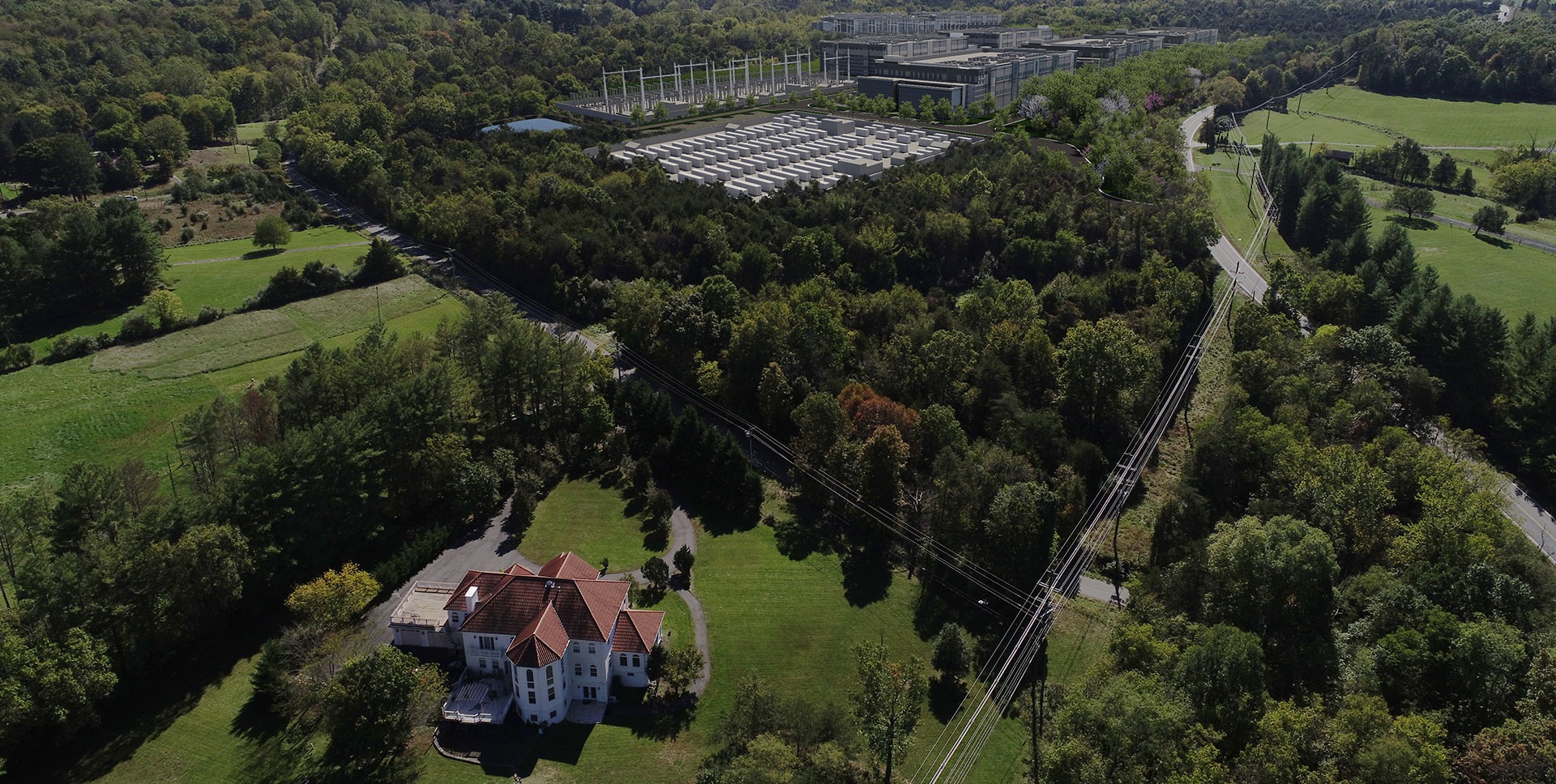
Every site presents different opportunities and constraints. At Spring Valley Technology Park, the design began with the landscape. The project preserves nearly 60% of the property as permanent open space while maintaining an approximately 0.24 floor area ratio—substantially lower than comparable data center campuses in Loudoun County. Buildings are located behind existing tree lines with layered landscaping, substantial setbacks, and architectural screening designed to minimize visibility from surrounding properties.
Our objective has been consistent and straightforward: thoughtfully planning a campus to provide critical functions and services like cybersecurity, health, public safety, research & innovation, business incubation while preserving the natural features that define Loudoun County.
Straight talk, not spin
Straight talk.
Every major project creates impacts. Ours is no exception. Our objective and our commitment will always be the same: to reduce visual, environmental, and operational impacts as much as practicable through thoughtful design, enforceable commitments, and continued engagement with this community. We sincerely welcome your input, and we’re better for it every time we get it.
You spoke. The plan changed
What we’ve heard.
We’ve spent real time with neighbors, homeowners associations, and local residents — and people have been candid with us. That’s a gift, not a problem. Here’s what we’ve heard you raise:
These concerns have directly influenced how the project has evolved — as you’ll see throughout the design of Spring Valley Technology Park. The version before the County today is not the one we first submitted, and that’s because people here spoke up.
These concerns have directly influenced how the project has evolved as you will see in the design of SVTP.
| Traffic | We fund the long-awaited widening of Evergreen Mills Road, new turn lanes, a 10-foot shared-use path, and intersection improvements. Once operating, the campus generates a fraction of the daily trips a residential build-out of this land would. |
| Water | Air-cooled cooling systems were chosen specifically to avoid water-intensive methods. Public water and sewer are extended at no cost to Loudoun Water, with groundwater and surface water tested both before and after construction. |
| Transmission lines | We’ve committed publicly to pay whatever it costs to underground transmission lines, and the site was chosen because it already sits beside existing infrastructure — avoiding new corridors through the area. |
| Noise | Backup generators are the cleanest class available and sit inside fully enclosed structures with screened yards. Hundreds of feet of setback and layered buffers do the rest, with noise testing at the property line and at nearby homes. |
| Lighting | Exterior lighting is kept low and warm — capped at 2,800K and 20 feet — and dimmed or switched off by 11 p.m. each night to protect the night sky. |
| Property values | The conditions that tend to affect nearby home values — visible buildings, mechanical noise, traffic, light — are precisely what the screening, buffering, setbacks, and road improvements are built to prevent. |
| Views | Existing tree lines stay in place, with preserved forest, earthen berms, and evergreen plantings layered in front of buildings set 200 to more than 1,000 feet back. Entrances are angled so the campus isn’t visible head-on. |
| Environmental impacts | Nearly 60% of the site is preserved as permanent open space, with tree conservation, a reforestation area, pollinator meadows, protected-species studies, and stormwater treated on-site. |
The Commitments
Commitments that Go Beyond Requirements.
Spring Valley Technology Park includes voluntary commitments that exceed standard regulatory requirements. These commitments are incorporated into the project’s proffers submitted to Loudoun County and provide long-term environmental protection, operational accountability and community benefits.
Majority open space
Nearly 60% of the site will be kept as permanent open space — undisturbed woodland, stream buffers, and tree conservation. Well beyond the County’s 50% expectation, because protecting this land is the point.

Air-Chilled Cooling Systems
Chosen specifically to avoid the water-intensive cooling people here are right to care about — plus public water and sewer that we extend at no cost to Loudoun Water.

EPA Tier 4 Backup Generation
SVTP will utilize EPA Tier 4 generators — the cleanest, most advanced class available — inside fully enclosed structures with screening walls. Backup only, and designed to run rarely.

A sky that stays dark
Exterior lighting kept low and warm, and dimmed or switched off by 11 p.m. each night — so the night sky you can still see out here stays that way.

Groundwater & Surface Water Monitoring
Tested before and after construction, stormwater treated on-site, and rainwater captured and reused for landscaping.

Transportation Improvements
We fund the long-awaited widening of Evergreen Mills Road, new turn lanes, and a 10-foot shared-use path — a safety improvement this corridor has needed for years, built in phases.
DESIGNED FOR COMPATIBILITY AND COEXISTENCE
DESIGNED FOR COMPATIBILITY AND COEXISTENCE
The physical layout of SVTP was designed to reduce visual impacts, preserve existing environmental features and maintain substantial separation between development and adjacent properties.
Preservation of existing tree lines is prioritized and supplemented with berms, evergreen landscaping and architectural screening. Buildings are positioned hundreds of feet from neighboring properties and entrances are designed to eliminate views into the campus from Evergreen Mills Road.
0.24 Floor Area Ratio
substantially lower than other data center campuses in Loudoun County.
~325 acres
Thoughtfully planned in Loudoun County, off Evergreen Mills Road
~60%
Preserved as permanent open space
200–1,000 ft
Forested setback between the buildings and neighbors
100% air-cooled
Cooling designed to minimize water use
$0 to residents
The project funds its own power and water infrastructure
Questions & answers
The questions local residents are actually asking.
Each answer leads with what we understand and points to the commitment that backs it up. and points to the commitment that backs it up. Tap any question to read more.
01. Why the Transition Policy Area (TPA)? We moved here because of what the TPA protects.
We understand why people care so deeply about the Transition Policy Area. Its open landscapes, mature trees, scenic roads, and lower-density character are exactly what make this part of Loudoun County unique.
The Transition Policy Area was established to guide change carefully—not to eliminate it entirely. The General Plan recognizes that some form of development will occur over time, but it places a strong emphasis on preserving open space, protecting environmental resources, maintaining generous buffers, and respecting the area’s rural character.
From the beginning, we assumed this project would be judged not only by what it is, but by what neighbors would see, hear, and experience every day. That is why the campus was intentionally designed with one of the lowest development intensities proposed for a hyperscale data center campus in Loudoun County—an approximate 0.24 FAR (maintained below 0.30) approximately 0.30 FAR (development density) nearly 60% open space, preserved forests, enhanced buffers, and substantial setbacks.
We understand that some residents oppose any development on this property. While we may not agree on every aspect of the proposal, we believe the design should be evaluated on how well it protects the qualities that make the Transition Policy Area unique with focus on visual and noise impact mitigation and elimination, preserving open space, and safety (widening Evergreen Mills Road to improve safety in an area with a history of fatalities).
02. Will I be able to see it from Evergreen Mills Road or from my home?
We are keeping existing tree lines in place and layering screening behind them — preserved forest, earthen berms, evergreen plantings, then buildings set hundreds of feet back behind all of it.
Setbacks range from about 200 feet to over 1,000 feet, and entrances are angled so the campus is not visible head-on. Driving by you will see trees and landscaping, not data center building.
03. What are you committing to that goes beyond what the County requires?
We hear you — meeting the minimum is not what this community deserves, and it is not what we set out to do.
With a dramatically low FAR of less than 0.30, significantly lower than any other approved or existing data center development in the County. SVTP prioritizes open space and environmental stewardship. By preserving open space, the Project is providing a commitment far greater than that of any comparable data center development within the County, aligning fully with the Transition Large Lot Neighborhood Place Type’s objectives.
EPA Tier 4 generators — the cleanest, most expensive class — inside six-sided enclosures. Air-cooled cooling to reduce water use. Exterior lighting capped at 2,800K and 20 feet, dimmed by 11 p.m. to protect the night sky. Enhanced native buffers on every side. And where there are still open items, we will name them in the detailed FAQ.
04. What about noise? Even projects that meet the legal limits can still be heard.
Meeting a regulatory standard is different from protecting the quiet enjoyment of your home. From the beginning, the goal was not simply to comply with County noise requirements, it was to reduce what neighbors experience beyond the property line.
The campus is designed with hundreds of feet of separation between equipment and nearby homes, extensive preserved woodlands, enhanced landscape buffers, and backup generators housed inside fully enclosed six-sided structures. The generators are EPA Tier 4 units used only during emergencies, maintenance, and periodic testing—they are not part of normal daily operations.
Just as importantly, the project commits to independent noise monitoring before, during, and after occupancy, with measurements taken at the property line and representative nearby residences—not just next to the equipment.
05. Northern Virginia’s grid is already stretched. How does this project fit in?
The demand for electricity in Northern Virginia has been growing exponentially in recent years, and it is reasonable to ask whether our development could affect electric reliability.
This project cannot simply connect to the grid because it requests service. Dominion Energy, NOVEC, and the Regional Transmission Operator (RTO) PJM independently determine whether adequate generation, transmission, and distribution infrastructure exist—or what improvements must be built—before new service can be provided. If the system cannot reliably serve the project, it cannot be energized.
The project is also responsible for funding the electric infrastructure needed to serve the campus. Existing residents will not be asked to pay for the project’s electrical connection or required utility upgrades and utilities are now requiring financial guarantees for the requested usage.
In addition, SVTP is proposing a utility-scale Battery Energy Storage System (BESS) designed to support system reliability and operational flexibility. While its operation will ultimately be coordinated with the serving utility and applicable regulations, it provides additional resilience that can help support the broader electric system during periods of peak demand. We are the first project in Loudoun County to allocate a portion of our developable area to support the grid.
06. Will new transmission lines run near my home?
One of the reasons this property was selected is that it is located less than one mile from existing 500 kV and 230 kV transmission infrastructure, reducing the need to establish a new transmission corridor to serve the project.
We have formally requested that the transmission line extension to our project be installed underground and have committed to 100% funding that work, regardless of cost.
We have also located the substations that serve the project on-site in screened areas that are not visible to the public, eliminating any visual impacts.
The final routing and design of transmission facilities are determined by the regulated utilities and, where required, the State Corporation Commission—not by the developer. While we cannot decide those outcomes, we believe it is important to be transparent about what we can control and what we cannot.
Our objective is not simply to serve the project— it is to do so in a way that minimizes new visual impacts on the surrounding community.
07. Without a tenant yet, what can you commit to on water usage?
Pursuant to our proffer, the Project has a binding commitment to incorporate air-cooled chiller systems into the design of the data center buildings on the Property to reduce water usage associated with traditional cooling systems.
The site plan or Construction Plans and Profile Approval (CPAP), for each building on the Property, whichever is first, shall demonstrate that construction of each such building(s) will incorporate air-cooled chiller systems into the design.
The Owner shall also provide confirmation that the project has incorporated air-cooled chiller systems prior to the issuance of the first certificate of occupancy for each building.
08. Will the campus use on-site gas turbines?
No.
09. What will construction be like — and for how long?
We understand that temporary disruption matters to nearby residents. The project is expected to be built in phases, with construction activity coordinated through approved site plans, permits, access points, haul routes, and applicable County and VDOT requirements.
The project also includes major transportation improvements, including the widening of Evergreen Mills Road and related turn-lane and frontage improvements, funded by the developer at no cost to the County.
On timing, the project would not break ground immediately after a Board decision. Final engineering, site plan approval, permits, utility coordination, and construction plans would still need to be completed. Based on that process, construction would likely begin no earlier than late 2027 or 2028.
10. Would SVTP create more traffic than other uses?
With nearly 60% open space, the long-term traffic footprint of SVTP is consistent with other uses this land could support including low to middle density multifamily residential development.
On top of that, The project funds road widening, turn lanes, a 10-foot shared-use path, and corridor improvements that keep benefiting the area long after construction wraps.
11. How will SVTP affect emergency services, schools, and the services I pay for?
Historically speaking, and in the case of SVTP even more so, our Project asks extraordinarily little of public services — negligible demand on schools and minimal demand elsewhere — while funding 100% of its own infrastructure.
On the one genuinely new element, battery storage, we have proffered to a site-specific Emergency Response Plan developed with and approved by the County Fire Marshal, covering responder access, equipment shutoff, and containment.
12. Who is behind this project, and will you still be listening after the hearing?
Spring Valley Technology Park is being developed by Active Infrastructure, a team of established and successful industrial real estate experts with tens of million square feet of development experience, attorneys, and economic, workforce, & community development professionals with over thirty years of experience in community engagement, building successful public-private partnership and yes — staying engaged matters to us well beyond any single hearing.
Our principals have advised: Governor’s offices, Mayors, rural utilities and electrical membership cooperatives (EMCs), Chambers of Commerce, Industrial Development Authorities, labor unions and skilled trade organizations, County, City, and local economic development organizations. Our team has also written U.S. Department of Commerce Approved Comprehensive Economic Development Strategies for rural Economic Development Districts and have been responsible for drafting community benefit policies, worker safety, small business, minority, women, veteran and disabled owned business procurement programs, hiring, & apprenticeship programs.
This diversity of experience provides a unique and unmatched diverse perspective and lens in which we not only plan our developments but how we engage with public officials and community stakeholders to ensure everyone is heard and seeks alignment and common ground to maximize community, economic and fiscal benefits while maintaining quality of life.
The best proof we can offer is the project itself: the version before the Planning Commission is not the one first submitted. The buffers, open space, road improvements, screening, and utility design all evolved because of community and County feedback. We have already held meet-and-greets and Q&A sessions with neighboring HOAs, and we are committing to ongoing forums to keep listening and answering. We genuinely want to build this with the community, not around it.
Straight answers, from the people building it
Ask us anything. We mean it.
A good project can answer the hard questions — openly, in plain language, from the people actually behind it. Below are the questions Loudoun residents, HOAs, and officials are asking most, each with a direct answer and the commitment that backs it. Don’t see yours? Reach out, and we’ll answer it and add it.
Stay Connected
Let’s build this together — and keep talking the whole way.
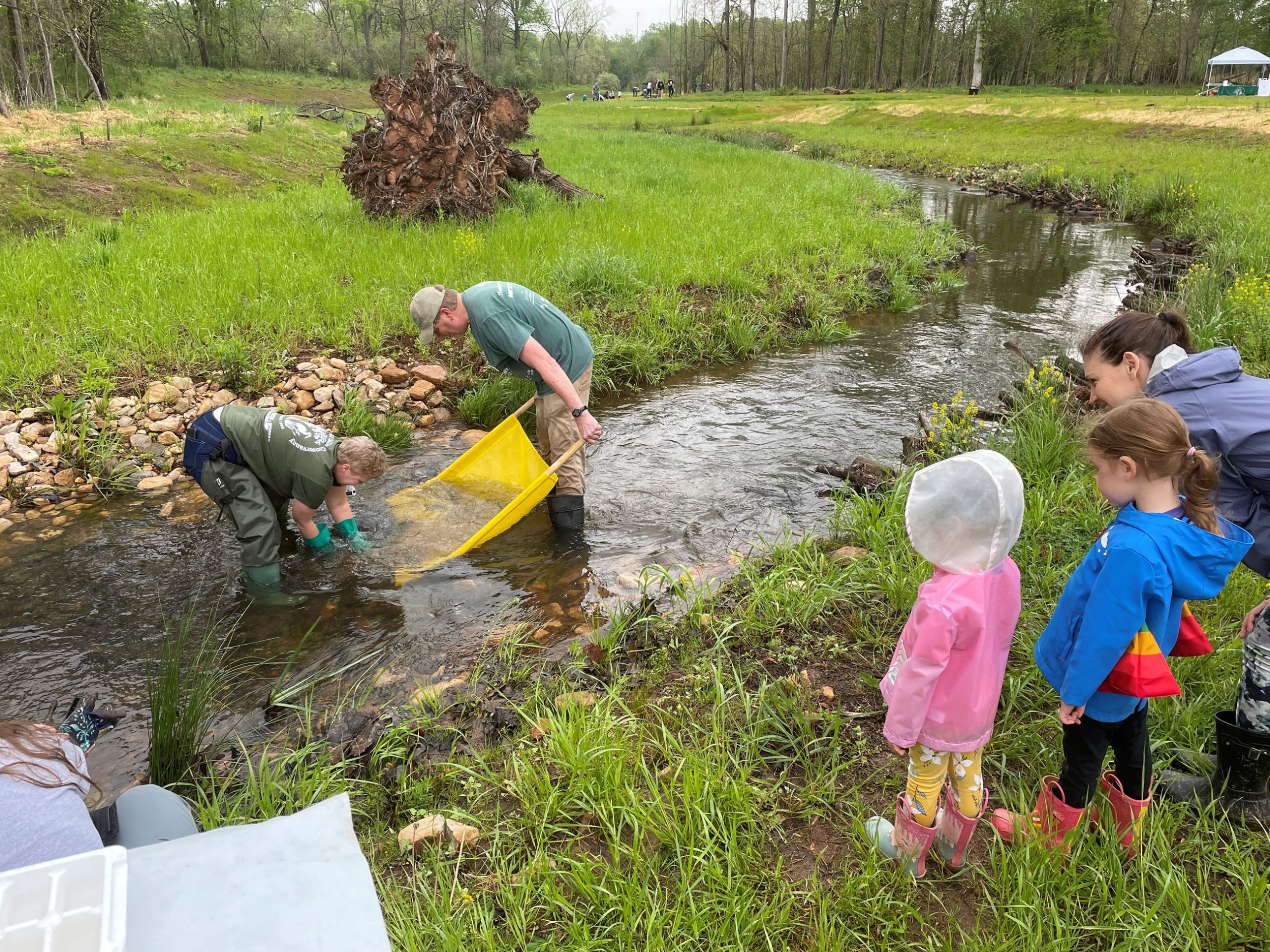
We want this to be the most open process you’ve seen. Sign up and we’ll share project news, hearing dates, and answers to new questions as they come in. We’ve already met with neighboring HOAs, and we’re committing to ongoing community forums — because the best version of this project is the one shaped alongside the people who live here.